



In mid-November, following the opening of several earthworks areas, the Auckland region experienced a series of significant rainfall events. One of our valued clients reached out for assistance, as they were facing challenges maintaining compliant discharge levels.
Their PortaFloc dosing system had been installed in accordance with the as-built plans from their original Chemical Treatment Management Plan (CTMP) and was dosing PAC (Polyaluminium Chloride) at the prescribed rate of 6ppm. As a mitigation step, the client had lifted the decants to retain water in the sediment retention pond (SRP). However, they now needed guidance on the appropriate corrective action to improve water clarity.
With support from a Cirtex Erosion and Sediment Control (ESC) specialist, two 20-litre water samples were taken: one from a drop-out pit upstream of the pond (which had received no chemical treatment and acted as a control), and one from the SRP itself, which had been dosed during rainfall. Visual inspection confirmed a noticeable reduction in turbidity in the pond sample compared to the control. However, to determine the most effective path to compliance, bench testing was required to assess whether there was a coagulant shortfall and, if so, quantify it.
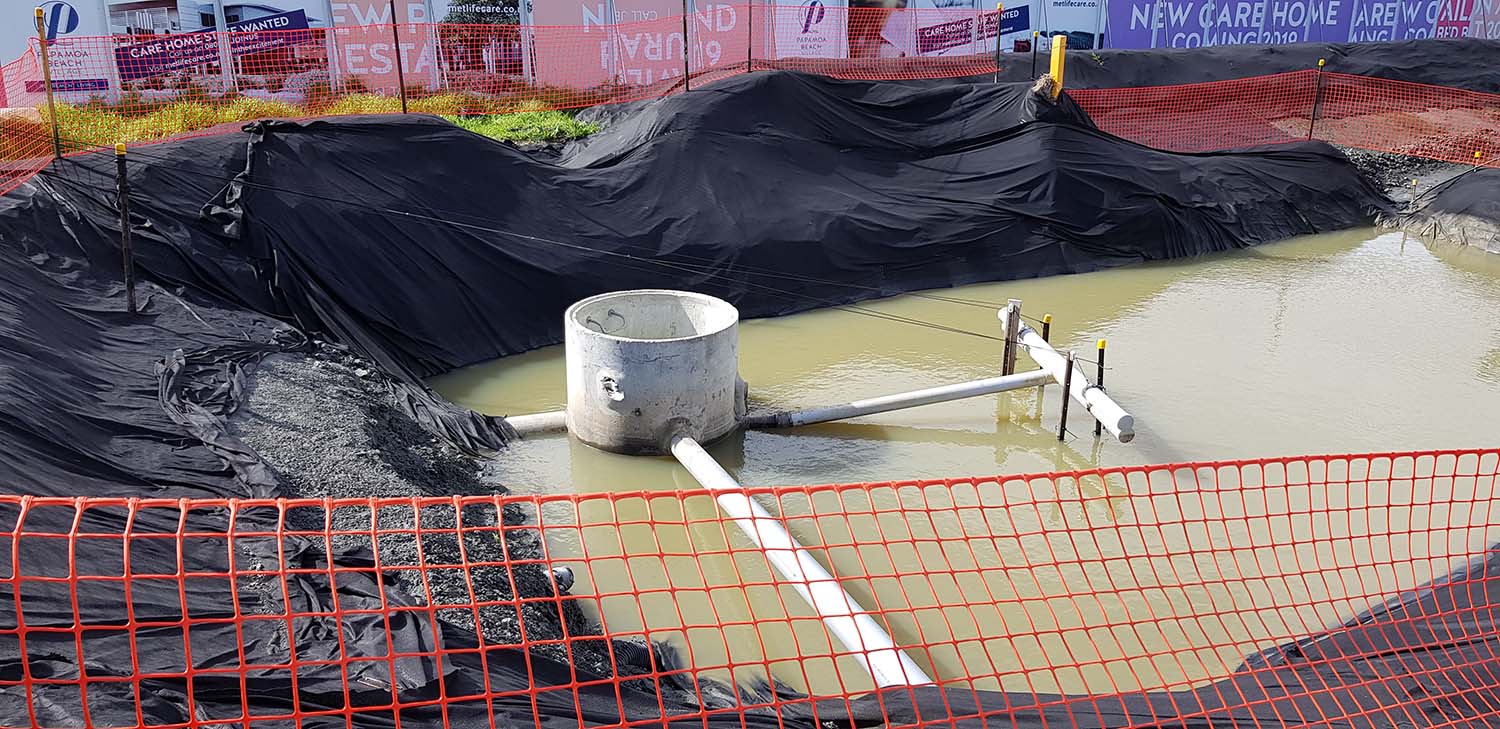
By applying PAC as a 1% solution to 1-litre samples in a controlled environment, we were able to identify a revised dose rate that aligned with the control sample, confirming the level of shortfall in the SRP. We also tested pH levels at the new dose rates to ensure they remained within regulatory thresholds. With this information, a precise batch dose could be applied to the pond to achieve the required 100 mm clarity target.
Using the RADS (Rain activated dosing system) calculator, we then updated the catchment tray sizes and header tank settings to reflect the new dose rates. Weeks later, the pond continues to perform well under rainfall conditions, and the client now has the confidence to carry out their own bench testing, while knowing Cirtex is available for additional support when needed.
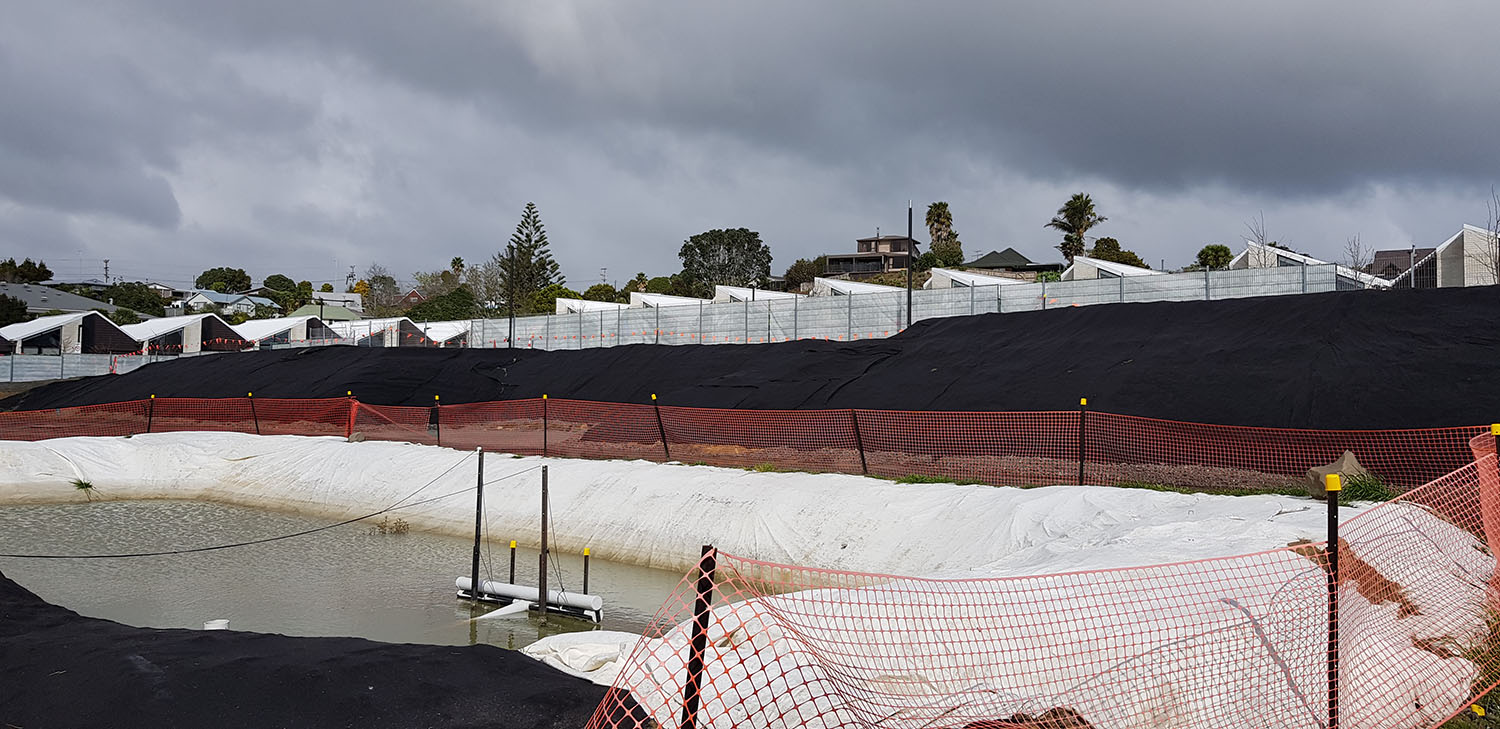
It has been observed that, on occasion, the forebay of the pond appears murky compared to the main body of water after rainfall. This is often caused by lag-time runoff -sediment-laden water that continues flowing into the pond for hours after rainfall has ceased, while the PortaFloc system has already stopped dosing.
Know your soil: Soil types can vary significantly across New Zealand. For this reason, it is a regulatory requirement to have a Chemical Treatment Management Plan (CTMP) in place before applying coagulants.
CTMP is your starting point: Dose rates provided in the CTMP are indicative. As different soil layers are exposed, or as aggregates and topsoil are imported, adjustments to dosing may be required.
Understand how flocculation works: Flocculation neutralises the charge on fine particles, allowing them to bind together and settle. Overdosing can reverse this process, causing particles to repel each other instead.
Read your CTMP thoroughly: It contains valuable insights from bench test results, showing how your site’s soils respond to coagulant.
Target the right areas: Chemical treatment is intended for open catchment areas that produce sediment-laden runoff during rainfall.
Get the right support: Cirtex provides full installation and training support for Portafloc systems, helping you through every step of your chemical treatment journey.
Use the CirtexHub: Visit www.cirtexhub.co.nz to access the RADS dosing calculator and GD05 Erosion & Sediment Control training modules. You can also print updated as-built dosing plans directly from the RADS tool.
Track and plan with data: Rainfall forecasts, actual rainfall, and a pond staff gauge are invaluable tools. By monitoring changes in pond levels during events, you can fine-tune your response, such as lifting decants to extend detention time prior to discharge.
Leverage Pondgate for detention control: With the Cirtex Pondgate, you can easily close pond outlets to retain runoff when required.
Cirtex is your trusted partner in chemical treatment and erosion control. We’re here to support your journey toward environmental compliance and deliver better outcomes for New Zealand’s natural environment. Contact us today for any E & SC requirements!